
As global IT spending is projected to exceed $6 trillion in 2026, the enterprise is facing a structural reset of its fundamental value architecture. The core shift for the upcoming fiscal cycle is the definitive move from “human-centric” per-seat licensing to “agent-centric” outcome and consumption models. With Gartner forecasting that 40% of enterprise SaaS spend will transition to these models by 2030, AI has moved past the pilot phase to become the functional core of the enterprise P&L. For the strategic leader, this represents a decoupling of technology costs from headcount, requiring a total re-evaluation of how we capture and protect ROI in a machine-driven economy.
The ROI of Silence: Why We Stop Paying for Human Logins
For the modern CFO, a systemic friction has emerged: the realization that we are still paying for “user seats” that autonomous agents are now filling. Traditional ROI models, built on the assumption of stable human headcounts and static infrastructure, are fundamentally ill-equipped to handle the fluctuating consumption patterns of an AI-augmented workforce. When a single agentic workflow performs the equivalent work of five full-time employees, the per-user license becomes expensive. We are entering a period of significant volatility where technology costs are non-linear, and the primary strategic challenge is ensuring that efficiency gains remain on the enterprise balance sheet rather than being captured by vendors.
The Liquidation of the Seat: Weaponizing Outcome-Based ROI
The enterprise is moving aggressively away from charging for access toward charging for results. This is most visible in the emergence of “Automated Resolution” (AR) billing. Incumbents like Zendesk are already pioneering this shift, offering committed AR rates at approximately $1.50 per resolution. However, the analytical rigor of a CFO reveals the hidden cost of flexibility: pay-as-you-go rates climb to $2.00 per AR. This shift fundamentally aligns vendor incentives with enterprise success; the vendor only generates revenue when the software delivers a verified, measurable business result.
This model is inherently fairer because it eliminates “shelfware”, the cost of inactive or over-subscribed seats. However, it demands a new solution architecture capable of real-time tracking and verification of outcomes.
“Customers increasingly want transparency and measurable ROI, not just access to features or storage.”
Autonomy at Scale: Navigating the Inference Economy
We are preparing for a workforce where “Agentic AI”, capable of autonomous execution is no longer experimental. Gartner predicts these agents will make 15% of everyday work decisions by 2028. Realizing this potential, however, requires solving the “Inference Economics” puzzle. As AI workloads become more power- and cooling-intensive, the Technology Architect must decide between expensive cloud services and the potentially superior unit economics of on-premises deployment for high-volume tasks.
From a “Finance for Finance” perspective, CFOs must overcome infrastructure obstacles, legacy integration, data architecture, and governance by implementing technical levers like resource tagging and automated resource management. These tools ensure that agentic teams augment human capabilities to make faster portfolio decisions while maintaining a strict reality check: in high-complexity cases, human labour may remain more cost-effective than agentic input.
The Efficiency Trap: Reclaiming Gains from the Vendor P&L
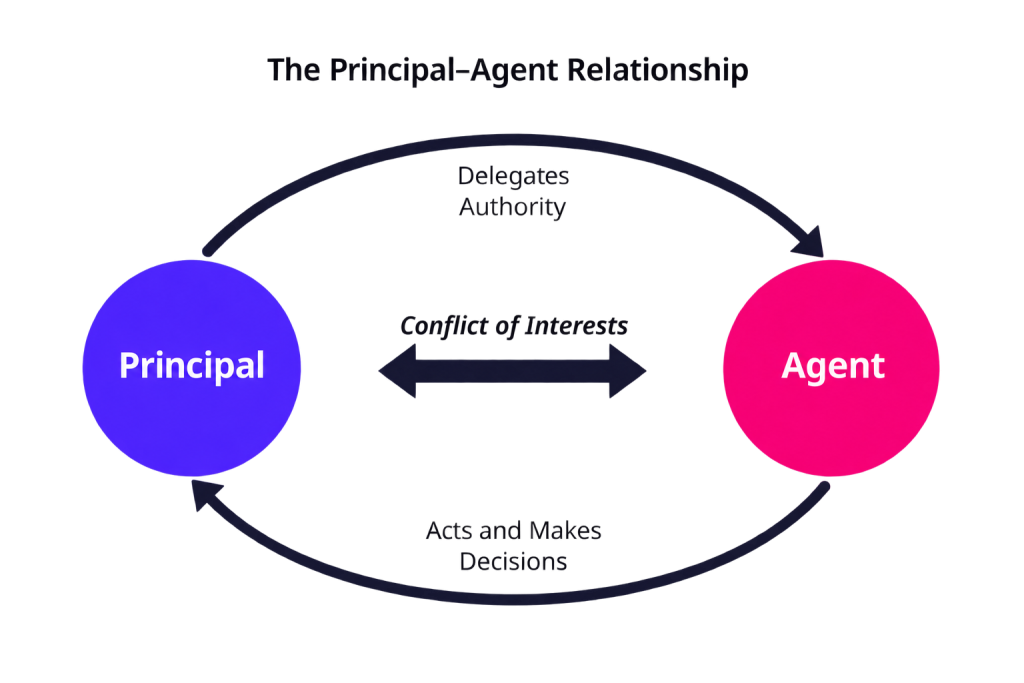
While outcome-based pricing is marketed as a partnership, it can become an “elegant trap” known as the Principal-Agent Problem. This occurs when a vendor’s incentives drift away from the enterprise’s goals. If an AI agent reduces average handle time from eight minutes to four, the business has doubled its efficiency. However, under many outcome-based models, the vendor captures that gain as revenue while the enterprise bill remains static.
To protect the P&L, consumption-based pricing (per-minute or per-turn) is often the superior choice. Unlike revenue-sharing, consumption models ensure that as your agents become faster and more efficient, your costs decrease.
“Your efficiency shouldn’t be a revenue stream for someone else; it should be your competitive advantage.”
The $13,000 Humanoid Workforce
The rise of AI-enabled robotics is moving beyond the pilot phase into warehousing and logistics. CFOs must now factor physical AI into long-term capital allocation. Data from the Bank of America Institute indicates that material costs for humanoid robots are projected to fall from $35,000 in 2025 to between $13,000 and $17,000 by 2035.
This shift transforms the Cost of Goods Sold (COGS) and necessitates the adoption of “resilience metrics”, uptime, transaction costs, and threat mitigation to justify the $6 trillion in global IT spend. CFOs must influence the dialogue around these operational KPIs as the workforce transitions to a hybrid human/AI model where uptime is as critical a metric as salary expense.
Strategic Terms for 2026 Renewals
Vendors are aggressively monetizing AI through an “AI Tax” a 20–37% price uplift at renewal. This is typically forced through SKU migration, where vendors retire legacy tiers and compel moves to AI-inclusive packages. Furthermore, with information security spending growing by 15% to combat evolving threats, the “AI Tax” can starve other critical resilience initiatives.
To protect the organization, finance leaders must employ strict Defensive Negotiation Terms:
1. Price Protection Clauses: Cap annual increases at 3–5%, indexed to CPI.
2. SKU-Level Price Locks: Prevent forced migration to higher tiers mid-term.
3. AI Feature Carve-outs: Prevent new AI features from triggering automatic billing uplifts.
4. Audit of Resolution Methodology: Scrutinize rules like Zendesk’s “72-hour inactivity” definition of a resolved ticket.
“There is a fundamental structural misalignment between agent-driven workflows and traditional per-user billing that can lead to paying twice, once for the seat and once for the AI consumption layered on top.”
Summary
The evolution of the CFO into an “architect of transformation” is now a requirement for survival. As we approach 2027, every technology dollar must be a direct line to a measurable business outcome. To ensure your current data and document architecture are prepared for this AI-native future, leaders must move toward streamlined, machine-speed resolution.
For those ready to transition their software stack into a compounding asset, exploring platforms like the Flowmono Product Demo provides the necessary foundation for managing information at the speed of the 2026 agenda.
