When Nigeria passed the Data Protection Act in 2023, it put a question to enterprise IT that most cloud strategies had never been asked to answer: where, exactly, does your data live, and who can lawfully touch it there?
That question now has a deadline. The Central Bank of Nigeria has directed banks, fintechs and payment providers to store and manage payment transaction data generated in Nigeria inside the country by January 1, 2027.
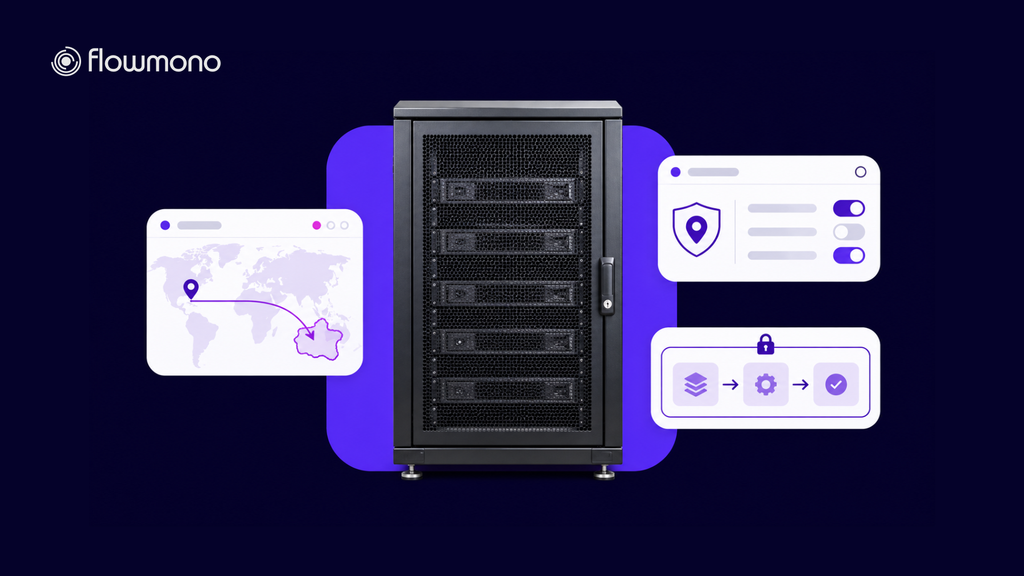
CIOs once moved workloads onto a handful of public hyperscalers because scale, speed and hardware efficiency were hard to argue with. Geography was an afterthought. Geopolitical volatility, regional privacy mandates and extraterritorial laws have made it a board-level question. The response has a name: geopatriation, the deliberate move of sensitive data, applications and AI workloads away from global hyperscalers and into domestic, regional or on-premise sovereign environments.
The shift is gathering pace. Gartner predicts that more than 75% of European and Middle Eastern enterprises will geopatriate workloads by 2030, up from less than 5% in 2025. It also expects more than 75% of enterprises outside the US to have a digital sovereignty strategy by then.
Many teams treat geopatriation as an infrastructure project. It isn’t. Real sovereignty covers the SaaS layer where daily work happens, not just the data center. Here are four forces behind the shift.
Jurisdiction, Not Cost, Is the New Question
Traditional cloud repatriation was about money: moving heavy workloads off public clouds to trim bills. Geopatriation asks a different question: which government can subpoena, audit or freeze our data?
Geopatriation turns on legal jurisdiction rather than server performance. Hosting in a regional data center doesn’t settle it, because data held by a US-headquartered provider can remain reachable under extraterritorial laws like the US CLOUD Act. The 2020 Schrems II ruling, which invalidated the EU-US Privacy Shield, showed how quickly the rules for cross-border transfers can change.
Autonomous AI Raises the Stakes
Modern enterprise software no longer just stores records. Agents read contracts, execute sign-offs, trigger payments and process personal data. Every inference, prompt log and automated step produces runtime data, and routing that data through offshore endpoints adds exposure.
Agentic AI raises the stakes of data residency, because the workflows that make decisions now need a clear, verifiable legal home. If software is executing legal agreements, you should be able to say where it ran and under whose law.
Sovereignty Is Becoming Regional and Local
Global enterprises once centralized IT in a few offshore hubs. That model is giving way to a mix of central strategy and local execution. Geopatriation reshapes global coordination rather than replacing it, and federated efforts like Europe’s Gaia-X show the pattern.
Nigeria is a live example. The CBN circular requires payment transaction data to be stored and managed within Nigeria, and NITDA’s guidelines say sovereign data must not be hosted abroad without its approval. Two practical points follow:
- Storage: primary databases, ledgers and backups that hold payment transaction data need to sit in Nigeria.
- Management: the circular says “managed,” so confirm with counsel what that means for administrative access and approval workflows, especially where an offshore SaaS tool touches payment data.
The directive is narrower than many headlines suggest. It covers payment transaction data, not every document your business holds. The first job is mapping which workflows actually touch it.
The SaaS Layer Is the Gap
Many tech leaders spend heavily to localize their databases, then leave procurement approvals, contract sign-offs, onboarding and document management running on offshore SaaS apps. Infrastructure sovereignty falls short if the workflows on top of it sit somewhere else.
That is the gap Flowmono is built to close for regulated organizations. Flowmono’s Central Bank compliance review covers what the new rule means in practice. The platform has three parts:
- E-Sign: legally binding signatures and contract workflows with tamper-evident audit trails, hosted on Nigerian infrastructure.
- Automate: multi-department workflows, from vendor onboarding to loan approvals, with execution logic kept under local control.
- Drive: document management, record retention and granular access controls, so sensitive records stay in local custody.
The Path Forward
Geopatriation isn’t a retreat from the cloud. It’s the cloud growing up. Organizations that align their cloud and SaaS architecture with the law early will be more resilient and easier to trust when rules change.
So ask one question of your stack. If a regulator or a geopolitical shift forced a change overnight, would your workflows hold up, or would you be scrambling to find where your data actually lives?
Is your SaaS stack ready for January 1, 2027? Map your payment-data workflows, close the SaaS gap and keep operations moving. Book your Flowmono demo today.
