Most vendor management problems are not vendor problems. They are infrastructure problems. Here is the full picture of what VPMC is, what it governs, and why the window to build it right is narrower than most leaders realise.
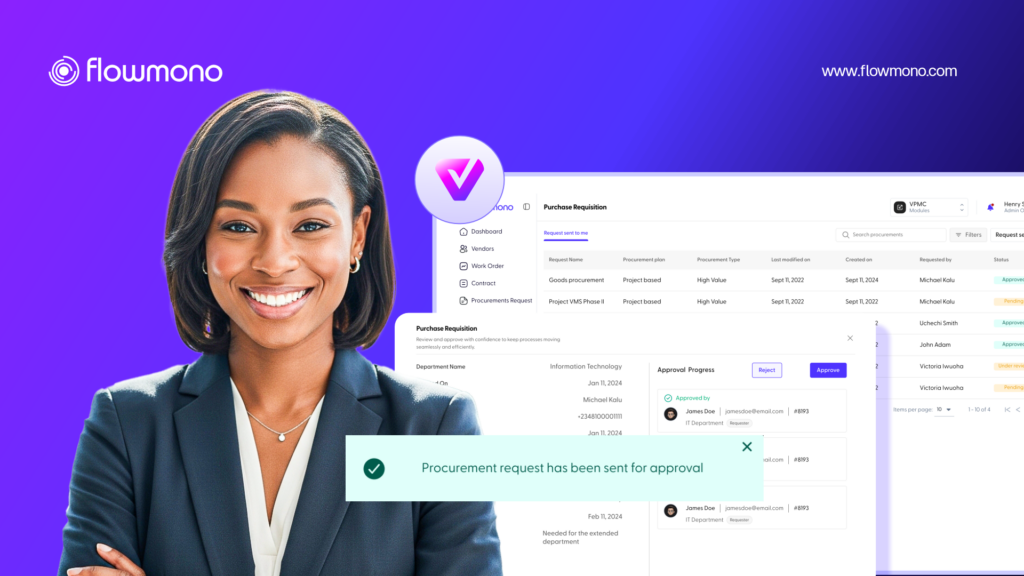
Most vendor management problems are not vendor problems. They are governance problems.
The vendor delivered late. The approval sat in an inbox for eleven days. The invoice came 18 percent above the contracted value. The compliance document was never collected. None of these things happen in isolation. They happen because the enterprise had no live system governing what the vendor was doing between the contract signature and the delivery date.
There is a name for the state most enterprises are in when it comes to vendor management. It is not vendor control. It is vendor hope.
| Vendor Hope (noun): the state in which an organisation manages its vendors through assumption rather than infrastructure. Instead of a live system that tracks delivery, routes approvals, and surfaces risk automatically, the business relies on people remembering to follow up, vendors choosing to self-report, and nothing going wrong between status calls. It feels like management. It is not. |
If answering three simple questions requires a spreadsheet, a message, or a phone call, the organisation is running vendor hope. Those questions: how many vendor engagements are active right now, which ones are behind schedule, and which purchase order approvals have been sitting unapproved for more than five business days.
The system built to replace vendor hope with vendor control is called Vendor and Procurement Management Cloud. This article is its foundation: what it is, what makes one good, what it governs, and why the enterprises that build it now will be in a structurally different position from those that wait.
What Vendor and Procurement Management Cloud Actually Is
Vendor and Procurement Management Cloud (VPMC) is a cloud-based platform and governance discipline that gives enterprises end-to-end control over every vendor relationship, from the moment a supplier is sourced to the moment the final invoice is settled and the engagement is formally closed.
It is not a database of vendor contacts. It is not a document storage system. It is the operational infrastructure that connects procurement, contract management, project delivery, payments, and compliance into one live, connected system where every event in a vendor relationship triggers the next one automatically.
What separates a strong VPMC from a weak one is depth of connection. A weak VPMC manages vendor contacts and stores contracts. A strong one connects vendor identity to purchase orders, purchase orders to project milestones, milestones to payment authorisation, and payment to compliance documentation. Every node in the vendor relationship speaks to every other. Nothing is isolated.
| A good VPMC platform does five things consistently: centralises all vendor data in a single, always-current registry; automates approval workflows for every purchase, change order, and payment; tracks project milestones in real time so delays surface before they cascade; builds an audit trail automatically as activity happens; and gives vendors and buyers a shared, trusted environment to transact without friction. |
The Gap Between Assumption and Reality
The Hackett Group’s 2025 Digital World Class Procurement research documents that top-performing procurement organisations execute 58 percent shorter procurement cycle times and generate 2.6x greater ROI than typical organisations. The differentiator is not budget or headcount. It is governance infrastructure.
The gap that infrastructure closes is not dramatic. It shows up in five places, repeatedly, across almost every enterprise that manages vendors without a connected control system.
| What leadership assumes | The Gap | What is actually happening |
| The contract is signed. Delivery is underway. | EXECUTION | The contract is filed. Nobody is tracking vendor milestones. |
| Approvals are moving through the right channels. | APPROVAL | Three purchase orders are sitting in inboxes. One approver is unreachable. |
| We have visibility into all active vendors. | VISIBILITY | The last update was a spreadsheet from five weeks ago. |
| Compliance is covered. The contract has the right clauses. | AUDIT | There is no audit trail of vendor activity since signing. |
| Finance knows where we stand against vendor budgets. | SPEND | Finance is reconciling invoices that do not match contracted values. |
The Core Vocabulary: A Diagnostic, Not a Glossary
Every term below represents a failure mode when it is misunderstood or absent. Read them as a diagnostic: wherever your organisation has no clear owner or process for one of these concepts, that is a governance gap.
| Term | What it means and why it matters |
| Vendor | Any external party delivering work, goods, or services inside your business. Vendors are not peripheral. They operate in your processes, on your timelines, and often with access to your systems. |
| Vendor Management | The discipline of governing supplier relationships from selection to closeout. Most enterprises manage the selection well. Almost none govern the delivery phase with equal rigour. |
| Procurement | The process of sourcing, evaluating, and contracting vendors. It ends at the signature. What follows is a different discipline with entirely different risks. |
| Purchase Order (PO) | The formal document that authorises a vendor to begin work or deliver goods. The PO is where contracted value meets real spend. It is also where discrepancies first appear. |
| Procure-to-Pay (P2P) | The end-to-end process from purchase request through to vendor invoice payment. One of the most commonly tracked metrics in enterprise procurement and one of the most frequently broken processes. |
| Contract Management | Administration of contracts across their full lifecycle. The signature is not the end of contract management. It is where execution accountability begins. |
| Supplier Relationship Management (SRM) | The strategic layer above transactional procurement. SRM is where vendor performance, partnership value, and long-term risk are actively managed rather than reactively discovered. |
| Approval Workflow | The chain of decisions that moves commitments through the organisation. Every stalled approval is a delayed project and a cost almost never attributed back to the workflow failure. |
| KYC (Know Your Customer/Vendor) | The compliance process of verifying a vendor’s identity, ownership, and regulatory standing before transacting. One of the most time-consuming steps in vendor onboarding and one of the most significant sources of friction in cross-border commerce. |
| Vendor Lifecycle | The full arc of a supplier relationship: sourcing, onboarding, delivery, performance review, and closeout. VPMC governs every stage. |
| Third-Party Risk Management (TPRM) | The discipline of identifying and managing the operational, compliance, data, and financial risks that come from working with external vendors. Gartner’s 2025 Market Guide for TPRM Technology notes that AI-assisted assessment is now a competitive differentiator, as TPRM is both data and labour intensive. |
| VPMC | Vendor and Procurement Management Cloud. The integrated platform that gives enterprises real-time control over every vendor engagement, from purchase request to final closeout, with a shared trust layer for both buyers and suppliers. |
The Vendor Lifecycle: Six Stages, One Control System
VPMC does not govern part of the vendor relationship. It governs all of it. For each stage below, ask whether your organisation has a system or relies on someone remembering.
| Stage | Risk Without Governance | What VPMC Governs | |
| 1 | Sourcing | No structured vendor evaluation record. Selection is informal and unauditable. | Structured intake, vendor shortlist, evaluation audit trail, and verified vendor profiles. |
| 2 | Onboarding | Compliance documents collected inconsistently. Vendor data lives in email. | Automated onboarding checklist, document registry, and supplier profile. |
| 3 | Contract Execution | Signature disconnected from procurement workflow. Work begins with no formal kickoff. | E-sign triggers purchase order creation, project workspace, and compliance record automatically. |
| 4 | Project Delivery | Milestones tracked manually. Delays invisible until too late to recover cheaply. | Live milestone tracking, automated alerts, AI-flagged risk, and escalation routing. |
| 5 | Performance Review | Assessment based on memory and relationship, not evidence. | Data-driven review against SLAs, delivery records, spend accuracy, and platform ratings. |
| 6 | Closeout or Renewal | No formal exit process. No institutional record of what happened. | Structured closeout with full engagement history, vendor rating, and renewal intelligence. |
Who VPMC Serves: Buyers and Suppliers Both Win
VPMC is not a tool that serves buyers at the expense of suppliers. It is a trust infrastructure that creates value for both sides of every transaction.
| Who | What VPMC solves for them |
| COO | Real-time visibility into vendor-driven operational risk. Not a monthly status report. A live dashboard. |
| CFO | Purchase order tracking against contracted value. Invoice variance flagged automatically before month-end. Full spend intelligence across the vendor base. |
| CIO | Governance over technology vendors with access to critical systems, with compliance documentation and AI-assisted risk assessment built automatically. |
| Procurement Team | A single platform connecting supplier intake, purchase orders, approvals, and vendor performance. End-to-end procure-to-pay visibility. |
| Compliance | An automated audit trail covering every vendor interaction, PO, and approval decision. Audit-ready without retrospective assembly. |
| PMO | External vendors held to the same execution standards as internal projects. Same visibility. Same escalation capability. |
| Suppliers and Vendors | Participate in a trusted network where verified performance travels with them. Track payments, project status, and communications in one place. Build a record that makes winning new business faster and easier. |
Why You Need It Now: Three Forces Converging
1. Vendor bases are growing faster than governance infrastructure
The average enterprise has doubled its active vendor base over the past five years. The tools used to manage five vendors do not scale to fifty. The gap between vendor complexity and governance capability is widening every quarter. The organisations that close it now build a compounding advantage. Those that wait pay an accelerating cost.
2. AI is raising the standard for what governance can do
Intelligent VPMC platforms are now capable of flagging vendor risk before it surfaces, predicting payment delays from historical patterns, and surfacing compliance gaps in real time without requiring a human to look for them. Enterprises still relying on manual processes are not just slower. They are operating at a structural disadvantage against competitors using AI-assisted procurement governance. Gartner’s 2025 Market Guide for TPRM identifies AI-assisted assessment as an emerging competitive differentiator precisely because TPRM is both data-intensive and labour-intensive.
3. The cost of establishing trust from scratch in every engagement is becoming commercially unsustainable
As enterprises increasingly source vendors across jurisdictions and sectors, the overhead of verifying credentials, collecting compliance documents, and establishing working relationships from zero every time is compounding. Platforms that carry verified vendor identity and performance records across engagements are reducing that overhead to near zero. Those without the infrastructure are absorbing costs their competitors are not.
Use Case: The KYC Problem That Is Slowing Down Vendor Commerce
Consider a professional services vendor that operates across six clients simultaneously. For each new client relationship, that vendor is asked to complete a full KYC exercise: submit company registration documents, tax certificates, director identification, insurance certificates, and compliance declarations. The same documents. The same information. Six times. Across six different portals, in six different formats, on six different timelines.
The vendor’s administrative team spends significant time each quarter on KYC exercises alone. Clients wait weeks for vendor onboarding to complete before work can begin. Some vendor relationships that should happen never start because the friction of getting through the onboarding process outweighs the perceived value of a small initial engagement.
This is not a compliance problem. It is an infrastructure problem. And it is one of the most significant and least discussed barriers to efficient vendor commerce, particularly across borders and multiple jurisdictions where compliance requirements multiply.
The solution is not to simplify compliance standards. It is to carry verified compliance across engagements rather than rebuilding it in each one. When a vendor completes their KYC once on a trusted platform, that verified identity and compliance record becomes accessible to every buyer they work with through the same platform. The vendor does not repeat the process. The buyer does not wait for it.
This is the direction Flowmono VPMC is heading: not just a governance tool for enterprises managing their existing vendor base, but a trust network where verified vendors and credible buyers find each other, transact with confidence, and build working relationships without starting from zero every time. The vendor portal of the future is not a document collection system. It is a marketplace where verified performance and identity travel with every participant.
| The organisations that govern vendors well do not just avoid problems. They create a compounding advantage: better supplier performance, faster procurement cycles, lower governance overhead, and institutional knowledge that transfers across every future engagement. According to The Hackett Group, top-performing procurement organisations generate 2.03x greater cost savings as a percentage of spend and lose 60 percent less value to contract noncompliance. The gap between their performance and the average is not talent. It is infrastructure. |
Conclusion
If you want to close the gap between assumption and reality in your vendor engagements and build the governance infrastructure that makes VPMC work in practice, Flowmono is a platform that connects procurement, contract management, project delivery, payments, compliance, and vendor identity into one live system. Book a demo here.
