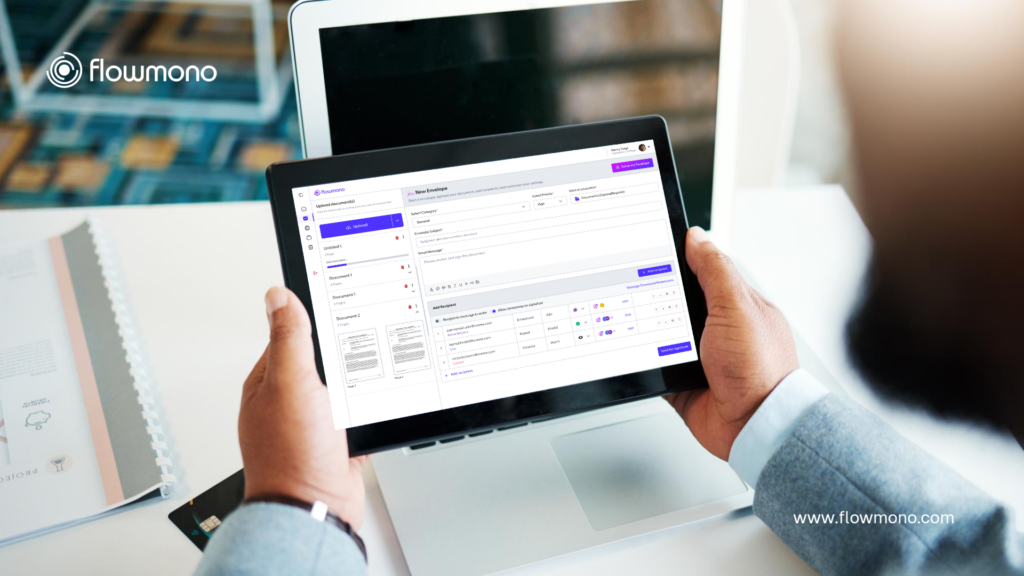
In the rapidly evolving landscape of 2026, enterprises face a critical decision: continue operating with fragmented point solutions, or adopt integrated AI workflow operating systems that drive autonomous operations. This fragmentation is exactly why the future of digital agreements is no longer about simple signatures, but about integrated flow. Research shows that 60% of organizations achieve ROI within 12 months of implementing workflow automation, with productivity increases of 25-30% in automated processes.
As highlighted in recent industry analysis by TechCabal, Flowmono is pioneering a shift toward Agentic Operations. By integrating E-Sign, Automate, and VPMC (Vendor Procurement Management Cloud) into a single AI Workflow OS, Flowmono isn’t just helping businesses go digital; it’s helping them become autonomous.
According to another article on TechCabal, Flowmono is pioneering a shift toward Agentic Operations by integrating three core pillars – Flowmono E-Sign, Flowmono Automate, and Flowmono VPMC (Vendor Procurement Management Cloud) into a unified AI Workflow OS. This isn’t digital transformation; it’s operational autonomy.
What is an Artificial Intelligence Workflow Operating System?
An AI Workflow OS functions as a centralized digital infrastructure that uses AI to orchestrate business logic across the entire enterprise. Unlike isolated point solutions that create data silos, a Workflow OS acts as the operational backbone, ensuring data flows seamlessly from vendor procurement (VPMC) to contract execution (E-Sign) via conditional automation (Automate).
IBM research indicates that AI is now tackling complex enterprise workflows as dependable systems that execute end-to-end tasks, rather than operating as proof-of-concept tools. This architectural shift enables what experts call “true machine automation”.
1. Electronic-Signature: The Trust Layer of the AI OS
Market Context and Growth
The foundation of any business transaction is the signature. However, in an AI-driven economy, a signature is more than just ink on a digital page; it is a data point in a larger workflow. Flowmono has already established the 7 game-changing benefits of e-signatures, but the 2026 “OS” model takes this further. The global digital signature market is projected to grow from $13.46 billion in 2025 to $70.25 billion by 2030, at a CAGR of 39.2%, according to MarketsandMarkets research. This explosive growth is driven by organizations replacing traditional wet signatures with secure, legally binding digital alternatives. The e-signature market generated $2.58 billion in revenue in 2023 and is expected to reach $13.4 billion by 2030, with a CAGR of 26.7%, according to P&S Intelligence, fueled by security concerns, government support, and adoption in emerging markets like Nigeria, India, China, and Brazil.
Flowmono E-Sign transforms the traditional e-signature model by embedding intelligence directly into the signing process. Rather than simply digitizing pen-and-paper workflows, Flowmono E-Sign operates as a contextually aware trust layer that validates document integrity, and creates immutable audit trails, all while maintaining seamless connectivity with vendor data from VPMC and approval logic from Automate. This means every signature isn’t an isolated transaction, but a data-enriched event that strengthens organizational compliance, accelerates deal velocity, and eliminates the manual reconciliation that plagues disconnected signature tools.
Why Flowmono E-Sign Is Different in 2026
1. AI-Assisted Smart Review: Before documents reach signers, Flowmono’s AI analyzes contracts to identify critical clauses, flag potential risks, and highlight missing terms. This pre-signature intelligence helps legal and procurement teams avoid costly oversights that traditional e-signature tools miss.
2. Cryptographically Secure Audit Trails: Every signature transaction generates tamper-evident audit trails with detailed, time-stamped evidence. The banking, financial services, and insurance sector holds the largest market share for digital signatures, driven by needs for secure, compliant customer onboarding and KYC verification. Flowmono’s audit capabilities meet these stringent requirements.
3. Regulatory Alignment for Emerging Markets: Flowmono is purpose-built for organizations operating in African markets, with built-in compliance for Nigeria’s Data Protection Act (NDPA/NDPR) while supporting international standards like eIDAS. Germany is one of the fastest-growing markets in Europe due to robust regulatory compliance under eIDAS and advanced digital infrastructure—the same compliance framework that Flowmono supports.
4. Ending the Dollar Tax: As a SaaS platform designed for African enterprises, Flowmono delivers enterprise-grade security and workflow capabilities without the prohibitive foreign-currency costs and complexity of Western alternatives. This pricing strategy aligns with market realities where cost optimization directly impacts adoption rates.
Integration Within the Workflow OS
Unlike standalone e-signature tools, Flowmono E-Sign operates as a connected module within the larger workflow ecosystem. When a contract is generated through Flowmono Automate after vendor verification in VPMC, the signature process inherits context from preceding steps—including vendor credentials, compliance status, and approval history.
2. Flowmono Automate: The Engine Room of Growth
The Shift to Agentic Automation
Flowmono Automate delivers on this prediction today by functioning as the decision engine that connects procurement triggers to execution outcomes. Where traditional automation tools require constant manual oversight and fail when exceptions occur, Flowmono Automate interprets business context, adapts routing based on real-time conditions (approver availability, transaction thresholds, compliance flags), and ensures workflows never stall due to human bottlenecks. It’s the operational brain that transforms static processes into intelligent, self-optimizing systems that scale with your business rather than against it.
Scaling Without Adding Headcount
For growth-stage companies, manual follow-ups represent the silent productivity killer. Organizations implementing workflow automation report error reduction rates of 40-75% compared to manual processing. This is why workflow automation is non-negotiable for enterprises looking to scale exponentially. Flowmono Automate eliminates this friction through:
1. Sequential Routing with Business Logic: Automatically route documents based on transaction value, risk profile, or department. A $5,000 contract is routed directly to the Finance Manager, while a $500,000 agreement triggers a legal review, CFO approval, and board notification, all without manual intervention.
2. Intelligent Alternate Signer Logic: When a primary approver is unavailable, the system automatically identifies and redirects to authorized proxies based on delegation rules, organizational hierarchy, and approval thresholds. This ensures business continuity without bottlenecks.
3. Smart Data Extraction and ERP Integration: Using OCR and AI-powered data extraction, Flowmono Automate reads signed invoices, purchase orders, and contracts, then automatically updates connected ERP or CRM systems, as detailed in our guide on moving from tasks to intelligent decisions. This eliminates dual data entry and ensures system-of-record accuracy.
Real-World Performance Impact
Businesses that use e-signatures and automated workflows experience up to an 85% productivity improvement, an 80% reduction in errors, and a 80% decrease in document turnaround time. When combined with Flowmono’s end-to-end automation, these gains are amplified across the entire procurement-to-payment lifecycle.
3. VPMC: The New Standard for Vendor Intelligence
The Vendor Management Software market is projected to reach approximately $10 billion by 2026, expanding at a CAGR of around 12%. Growth is driven by increasing demand for procurement efficiency, automation in vendor onboarding, and enhanced compliance requirements. The Vendor Procurement Management Cloud (VPMC) within the Flowmono OS creates a unified “Source of Truth.” This was first introduced in our vpmc beta launch, and it has now become a core pillar of the OS, centralizing vendor data, documentation, and interactions in one secure environment.
Flowmono VPMC reimagines vendor management as continuous intelligence rather than static record keeping. Traditional vendor management systems function as passive databases where information lives in isolation, disconnected from contracts, approvals, and performance outcomes. Flowmono VPMC operates as an active intelligence layer that continuously ingests vendor data, validates compliance in real-time, monitors performance across the entire relationship lifecycle, and automatically triggers appropriate workflows when vendor status changes (certification expiring, performance declining, risk threshold breached).
From KYC to KYV: Know Your Vendor
1. AI-Driven Onboarding and Verification: When a new vendor registers, VPMC automatically collects and verifies tax clearances, business registrations, certifications, and compliance documents. AI-powered validation cross-references submitted documents against regulatory databases, flagging discrepancies before onboarding completes.
2. Performance Monitoring and Health Scoring: VPMC continuously tracks vendor delivery times, quality metrics, contract adherence, and financial stability. Each vendor receives a dynamic health score that informs procurement decisions, contract renewals, and risk mitigation strategies.
3. Seamless Integration with E-Sign: Once a vendor passes verification, VPMC automatically triggers NDA generation and routing through Flowmono E-Sign. No manual handoffs, no data re-entry, the workflow remains within the secure OS environment with complete audit trails.
The Power of Three: How the Ecosystem Wins
The competitive advantage of the Flowmono AI Workflow OS lies in the seamless integration of these three pillars. When you master the supply chain, you reduce the “Hidden Cost of Broken Procurement.” Traditional approaches require 14 days to move from vendor bid to signed contract. Flowmono reduces this to 15 minutes:
1. The Trigger (VPMC): A pre-vetted vendor submits a bid through your procurement portal, including required compliance documentation.
2. The Logic (Automate): AI validates compliance docs against your requirements, checks vendor health scores, identifies the appropriate approval chain based on bid value, and auto-generates a contract using pre-approved templates.
3. The Execution (E-Sign): The contract routes to designated signers with full context, captures legally binding signatures with cryptographic verification, and archives the executed agreement securely in Flowmono Drive with searchable metadata.
Technical Superiority: Built on an Architecture of Trust
For enterprises evaluating AI-powered workflow platforms, Flowmono differentiates through security-first, compliance-native architecture:
1. Accuracy-Focused AI Design: Unlike generative AI tools that produce unpredictable outputs, Flowmono’s AI capabilities prioritize contextual accuracy and structured outcomes within defined workflows. This reduces manual errors without introducing uncontrolled variability.
2. Global Compliance by Design: The platform aligns with internationally recognized security and compliance standards, including ISO 27001, SOC II, and Nigeria’s NDPR. Regulations such as eIDAS in Europe, the ESIGN Act in the U.S., and the IT Act in India require businesses to adopt secure digital identification measures, validating digital signatures as legally binding. Flowmono’s multi-standard compliance enables cross-border operations without regulatory friction.
3. Enterprise Integration Ecosystem: Flowmono integrates with Google Workspace, Microsoft 365, and leading ERP systems, enabling organizations to connect workflows and approvals across existing tech stacks. Next-generation workflow platforms act as orchestration layers that connect automation across all enterprise systems, exactly how Flowmono operates.
Dominating the Market as an Operating System
Flowmono has evolved beyond being a digital signature company. The vision is to provide the operating system for autonomous enterprise operations. By unifying E-Sign, Automate, and VPMC, Flowmono provides the 5 pillars of workflow automation needed to outpace the competition.
Organizations that continue operating with fragmented tools will find themselves outpaced by competitors who have embraced integrated workflow intelligence. The teams achieving 60% ROI within their first year, cutting document turnaround time by 80%, and scaling without proportional headcount increases aren’t using more tools; they are using smarter systems.
For organizations ready to transition from fragmented tools to unified autonomous operations, Flowmono provides the architecture, intelligence, and execution layer to make that vision an operational reality. Start your free trial to experience the difference between signing documents and orchestrating workflows, or book a demo to see how enterprises in your industry are already operating at autonomous scale.
